Purpose
Translate insights into final, actionable refinements for launch readiness.
Shared under the: Limited Presentation License: UX Design Process >> license
Translate insights into final, actionable refinements for launch readiness.
This stage evaluates the high-fidelity prototype through structured usability testing — confirming that every design decision, interaction, and visual refinement performs effectively in real use.
Building on the findings of the second usability testing round, this stage transforms collected data into a comprehensive, insight-driven usability report.
It captures how users engage with the high-fidelity prototype, identifies any remaining friction points, and outlines final, strategic adjustments to ensure a seamless and inclusive product experience.
This report is a blueprint for confident, evidence-backed decision-making before launch.
The process begins with the careful organization of all research materials — including recordings, notes, and survey responses — to create a structured data foundation.
Each dataset is catalogued to ensure nothing is overlooked and that insights can be efficiently extracted in the next phase.
Goal: Create a clear, traceable record of all user interactions and observations.
Next, I design a detailed usability study tailored to the high-fidelity prototype.
This includes evaluating task completion rates, emotional responses, and navigation flow, highlighting both strengths and areas that require refinement.
Outcome: A cohesive summary of how well the product meets usability benchmarks, visual comprehension, and accessibility standards.
With the analysis complete, I begin drafting the structured Usability Testing Report, which includes:
Tone: Concise, analytical, and easy to interpret across technical and non-technical stakeholders alike.
Here, I refine 1–3 actionable, high-impact recommendations derived directly from user data.
These focus on:
Purpose: Bridge observation with strategy — transforming insight into design decisions ready for implementation.
The report is enhanced with annotated screenshots, flow diagrams, and visual highlights that connect findings to specific interface moments.
These visual cues make the insights tangible, ensuring clarity when presenting to stakeholders or development teams.
Result: A visual narrative that communicates not just what needs refinement, but why it matters.
Before delivery, I conduct a final internal review to ensure the document is coherent, visually clean, and strategically aligned.
Preliminary feedback from peers or key stakeholders may be integrated at this stage for validation.
Focus: Precision, clarity, and professional presentation.
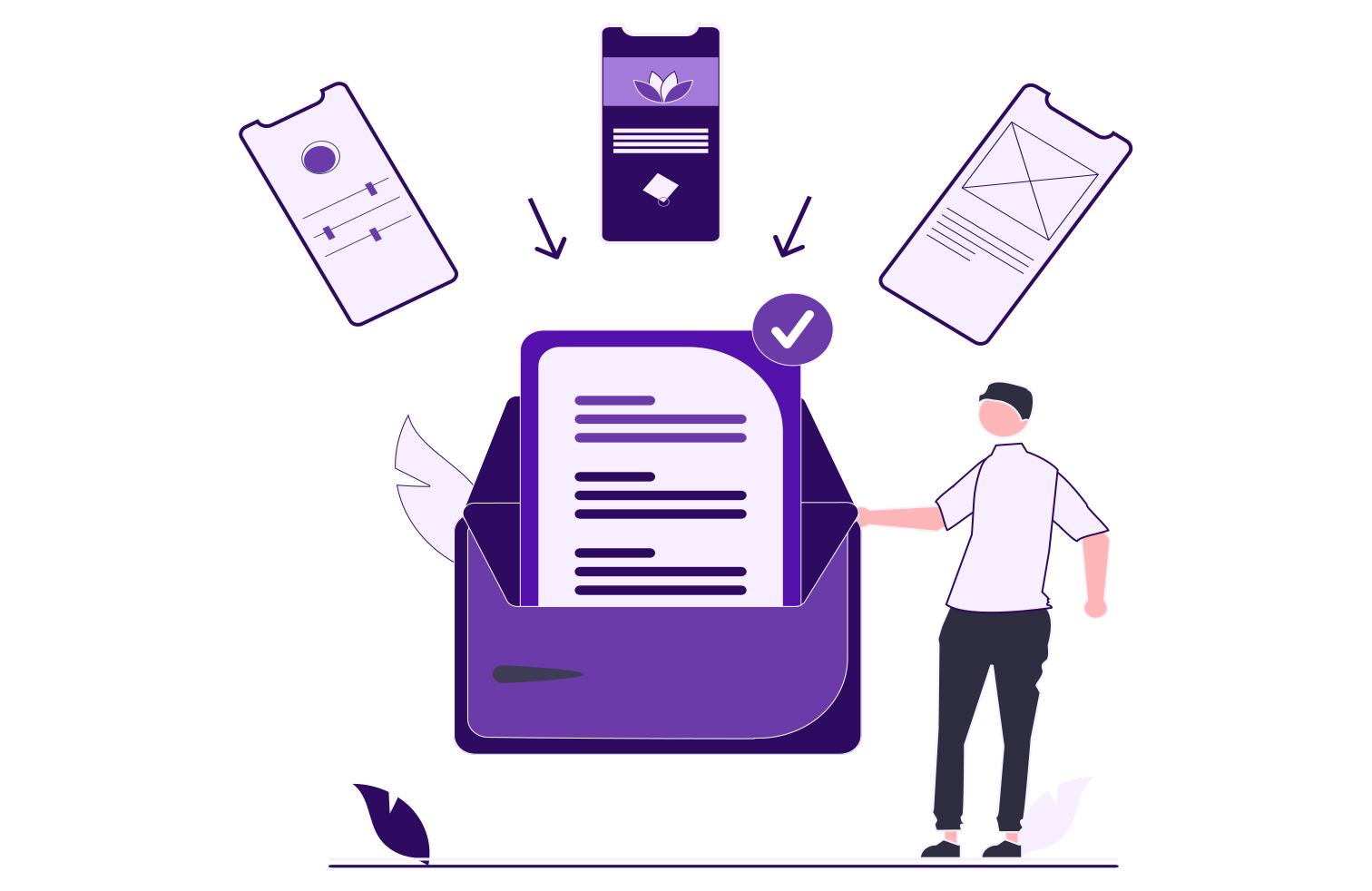
The final report is assembled, formatted, and delivered as a polished digital document — ready to support your next steps in design or development.
It becomes a living reference for your team, enabling long-term product consistency and alignment with user needs.
By the end of this stage, you receive a clear, data-backed roadmap for refinement — one that ensures your product’s design, performance, and accessibility are validated through real user interactions.
This final usability report closes the research loop, giving you the confidence to move forward with launch, knowing your experience has been tested, refined, and proven.
Estimated Total Duration: ~17-18 days
Primary Deliverable: Final Usability Testing Report (PDF or interactive format)
Navigation Tips