Stage 3 — Low-Fidelity Prototype
Shared under the: Limited Presentation
License: UX Design Process >> license
Purpose
Transform structure into experience.
At this stage, static wireframes evolve into an interactive prototype — the first tangible
expression of your product’s experience.
Here, the focus shifts from theoretical structure to applied usability, allowing both you and
your stakeholders to see how users will move, click, and think within your product.
The goal is to validate functionality, flow, and overall interaction logic early on — well before
high-fidelity visuals enter the picture.
1. Building the Initial Prototype
(~5 days)
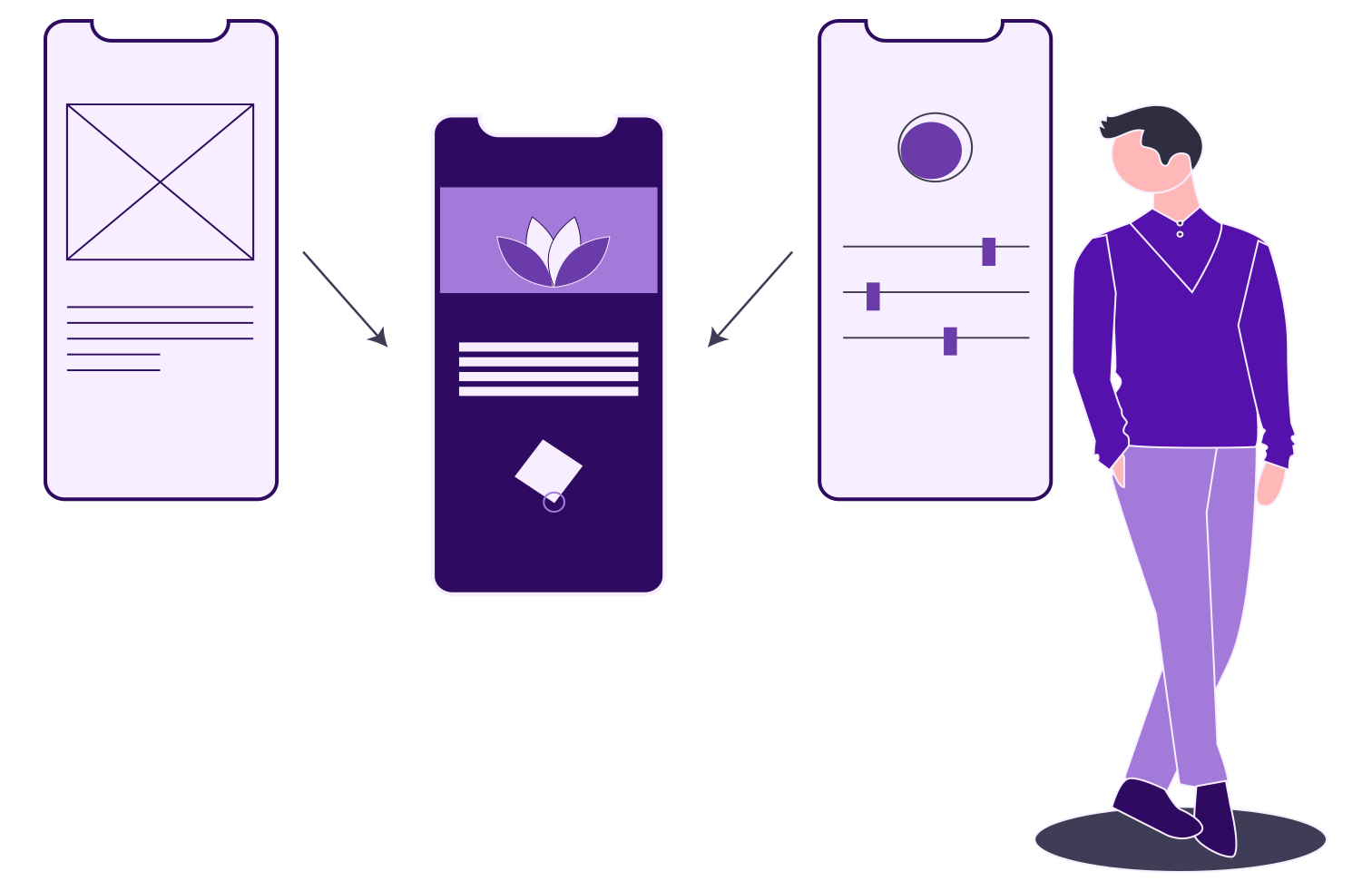
The process begins by transforming approved wireframes into a clickable low-fidelity
prototype.
Each screen is connected to illustrate navigation, user flow, and interaction hierarchy.
This step bridges imagination with interaction — turning static layouts into living systems
you
can explore.
2. Collaborative Review & Iteration Cycles
(~18 days)

Once the first prototype is ready, it enters a feedback-driven refinement loop.
This phase is collaborative by design — structured around multiple presentation and iteration
cycles to ensure every interaction feels intuitive and purposeful.
Cycle Overview
Cycle 1 (Days 1–5):
Initial prototype presentation and feedback.
Focus on validating layout, flow, and interaction priorities.
Cycle 2 (Days 6–11):
Refinements applied based on feedback.
Functional animations and navigation sequences evolve to better mirror intended use.
Cycle 3 (Days 12–16):
Final iteration cycle focused on clarity, polish, and usability alignment.
At this point, the prototype closely reflects the intended logic of the final product.
Each cycle combines structured presentations with applied feedback — balancing agility
with precision.
3. Finalization and Approval
(~3 days)

The final stage focuses on refinement and consistency.
The low-fidelity prototype now represents a cohesive, interactive narrative of your product —
complete with functional transitions, placeholder content, and accessible navigation.
It provides the clarity necessary for stakeholder approval and establishes a confident
foundation for the next phase: high-fidelity design.
Note
As a solo UX designer, I structure this process for efficiency while maintaining room for
collaborative depth. Timelines may vary depending on project complexity or the number of
iterations required. Each cycle is built to adapt — ensuring precision, not pressure, defines
the final outcome.