Is your SaaS built on a residential or skyscraper foundation?
Most "Post-MVP" companies are trying to build a skyscraper on a foundation designed for a weekend
cabin.
In the first phase of a SaaS, "good enough" UI works. You have one web app, a small team, and
everyone is in the same Slack channel. But as you scale—moving into Series A, adding native
iOS/Android teams, and expanding your feature set—the cracks start to show.
The Foundation Audit
If you missed our deep dive with the prior posts, here is the architectural checklist to determine if
your
design system is actually a liability:
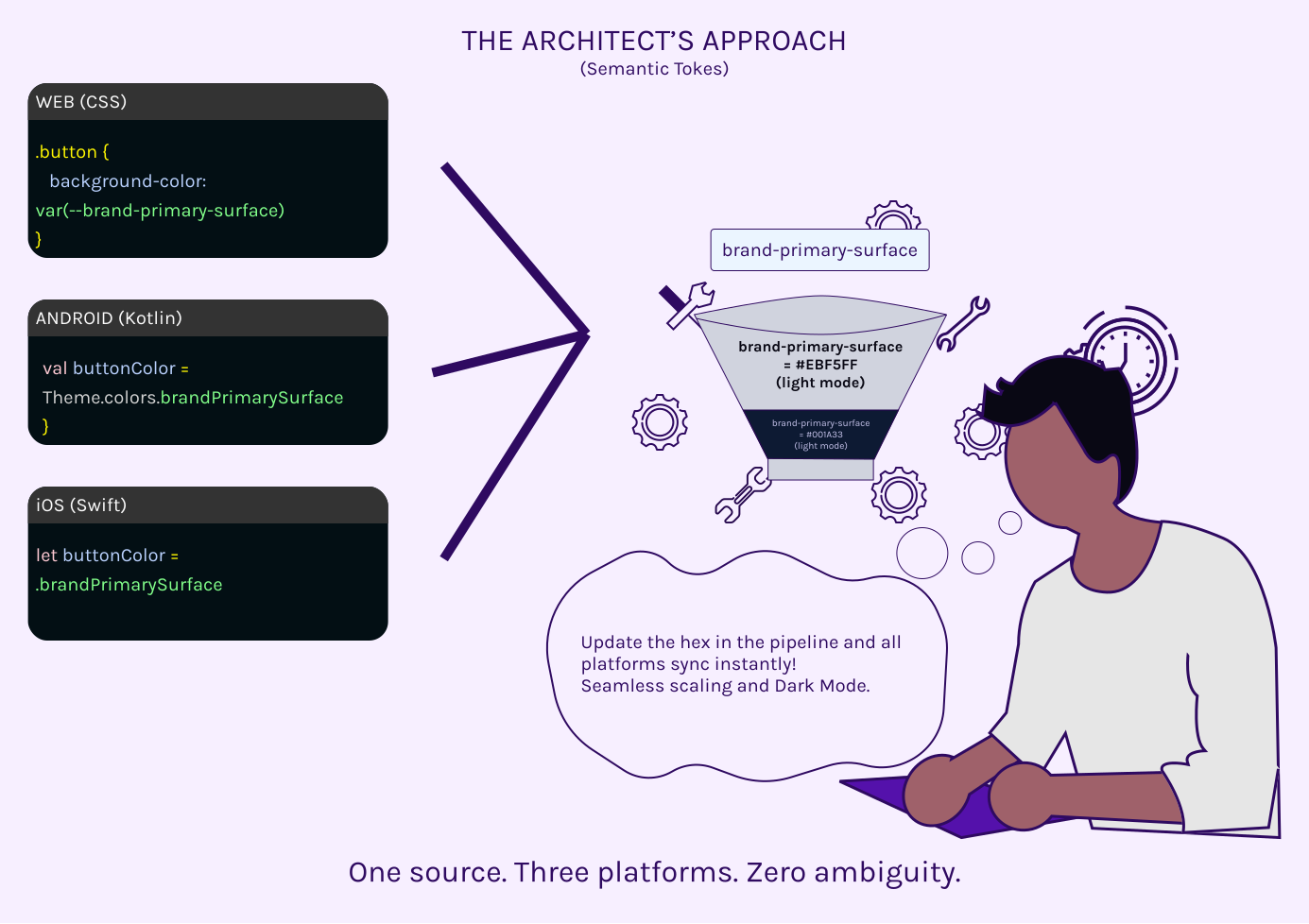
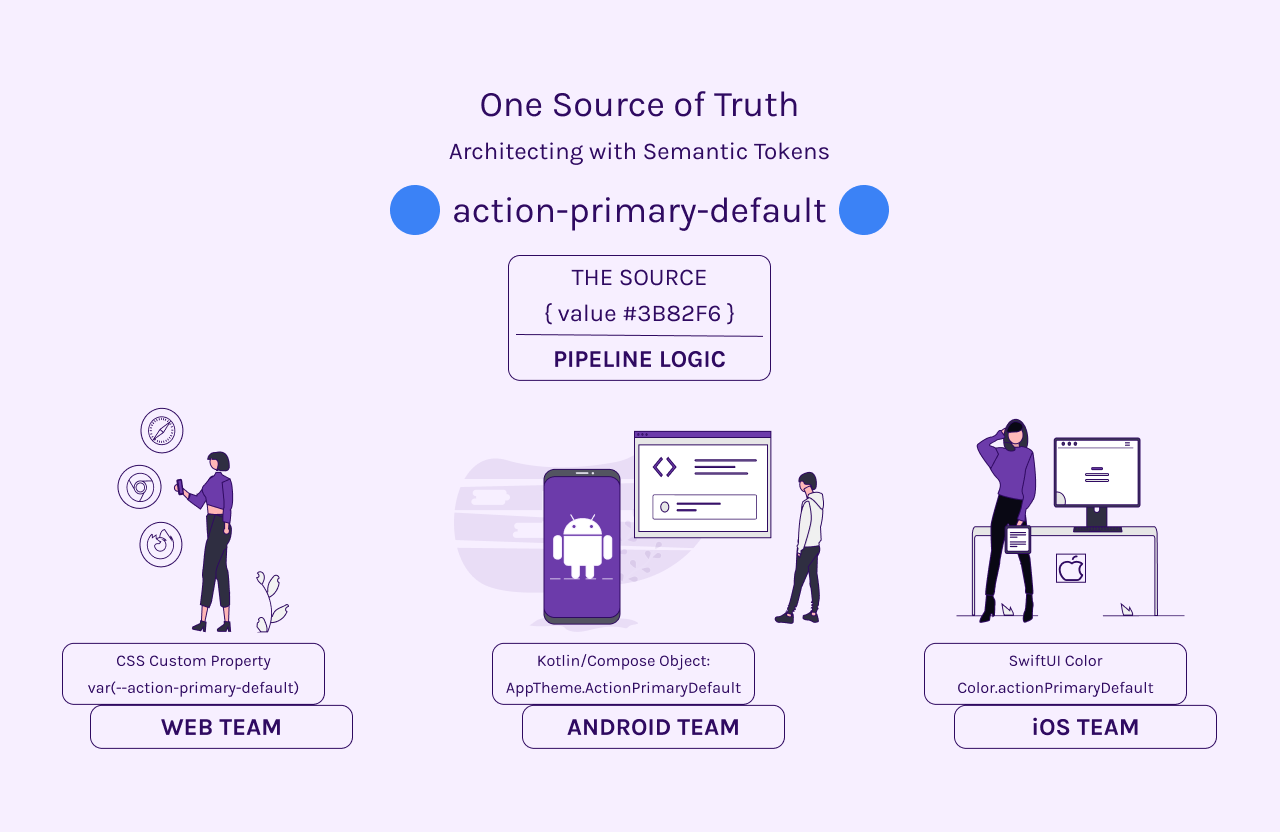
- The Single Source Test: If you change your brand's primary action color, can
you deploy that change to Web, iOS, and Android in one click? Or does it require three different
Jira tickets?
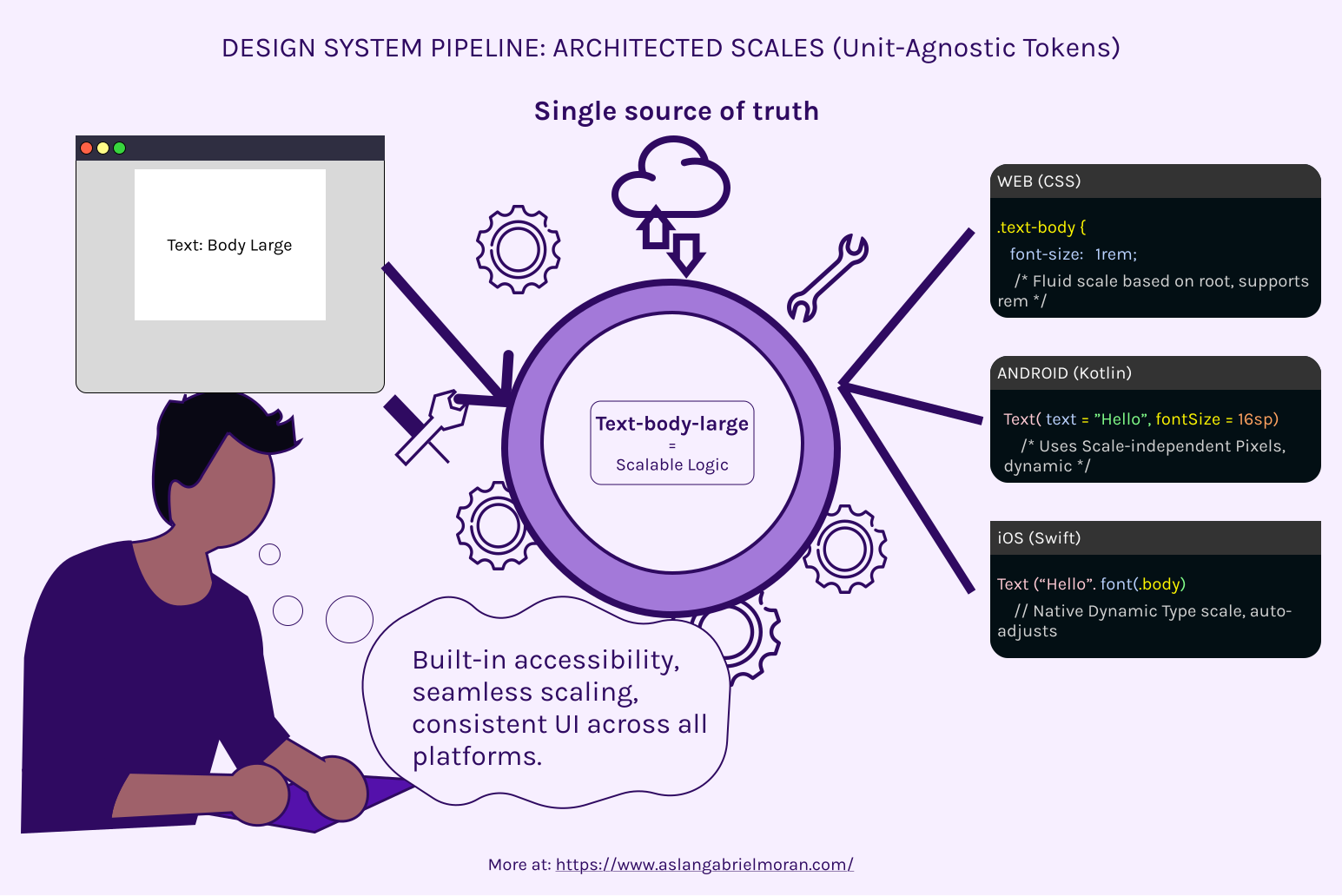
- The Unit Logic Test: Are your engineers manually translating Figma pixels into
rem, sp, and pts? If they are, you are paying a "translation tax" on
every single sprint.
- The Semantic Test: Does your code use names like blue-500 (visual) or action-primary-default (intent)? Visual names break the
moment you introduce a new theme or Dark Mode.
- The Manual Sync Test: Does your Figma file match your production environment?
If your "Source of Truth" requires a human to manually verify hex codes, it isn't a source of
truth—it's a suggestion.
The Skyscraper Logic
A skyscraper foundation doesn't just hold weight; it manages complexity.
We don't build "UI Kits." We architect Token Pipelines By establishing human-driven
logic on paper before writing a single line of CSS or Kotlin, we ensure that adding your 25th
complex pattern is just as easy as adding your first button.
Architecture beats aesthetics every time.
Stop fixing the same UI bugs on three different platforms. Build a foundation that scales as fast as
your roadmap.
Ready to audit your architecture? Submit our Design
System
Intake
>> form
Recommnedations from The Essentials section
 Ready to de-risk your UI?
>>
Ready to de-risk your UI?
>>