"Light Blue" is a color. "Brand-Primary-Surface" is a command.
If your design system documentation uses names like Sky Blue, Light Gray, or Darker Navy, you haven't built a system. You’ve built a coloring book.
For a scaling B2B SaaS, naming a color based on how it looks rather than what it does is a recipe for manual overrides and broken layouts.
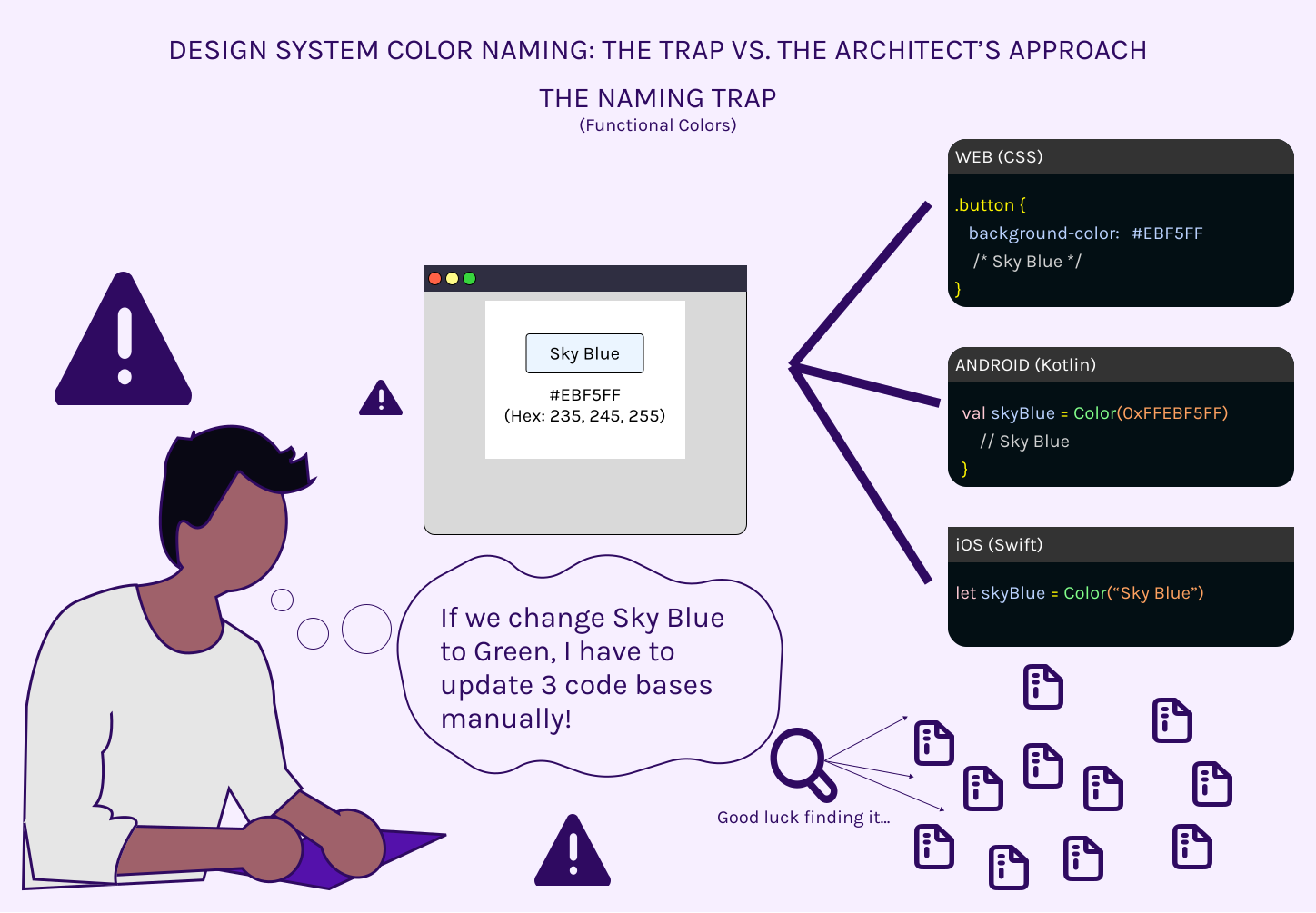
The Naming Trap
When your engineer sees color: #EBF5FF (Sky Blue) in Figma, they have no context.
- Is this a button background?
- Is it an alert banner for "Info" states?
- Does it change when the user toggles Dark Mode?
If it’s hard-coded as "Sky Blue," and you decide to change your primary brand color to Green, your devs now have to find-and-replace "Sky Blue" across three different codebases. It’s tedious, error-prone, and expensive.
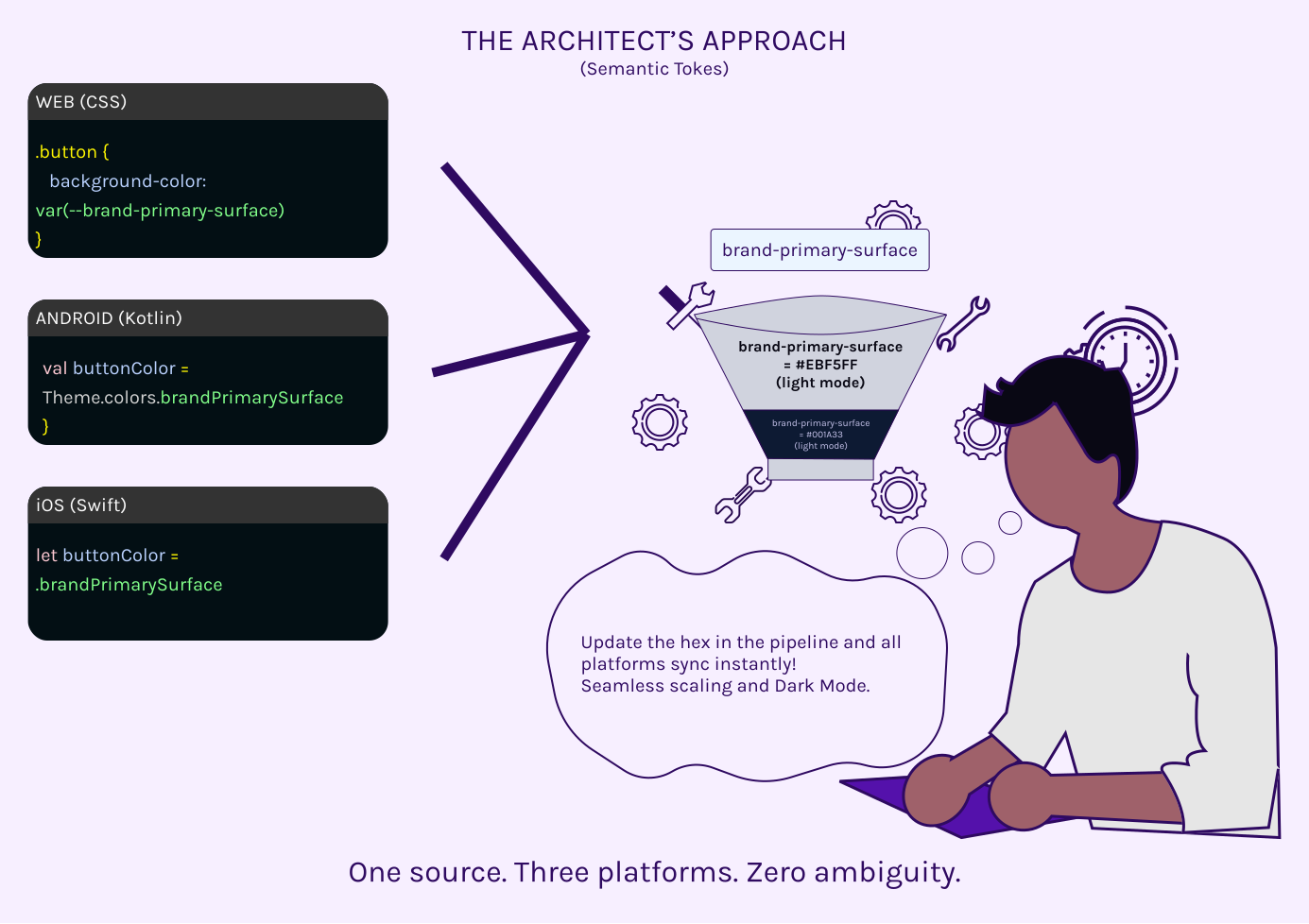
The Architect’s Approach: Semantic Tokens
We don't design with hex codes. We architect with Intent
By using a semantic token like brand-primary-surface, we create a logic layer that lives between the design and the code:
- Logic-First: The name describes the function. The value is secondary.
- Platform Agnostic: The Web sees a CSS Custom Property. Android sees a Kotlin Object. iOS sees a SwiftUI constant.
- Future-Proof: Want to launch Dark Mode? You don't change the code. You simply map brand-primary-surface to a new hex value in the pipeline. The entire product updates across Web, iOS, and Android instantly.
Why this matters for Scale-Ups
In the "Post-MVP" phase, you can't afford to have your engineers playing "pixel detective." Every minute they spend manually syncing a color is a minute they aren't building the features that drive your MRR.
We build the pipeline so your team can stop talking about "shades of blue" and start talking about deployment velocity
One source. Three platforms. Zero ambiguity.
Ready to de-risk your UI? Submit our Design System Intake >> form